
What Is Beauty Product Development?
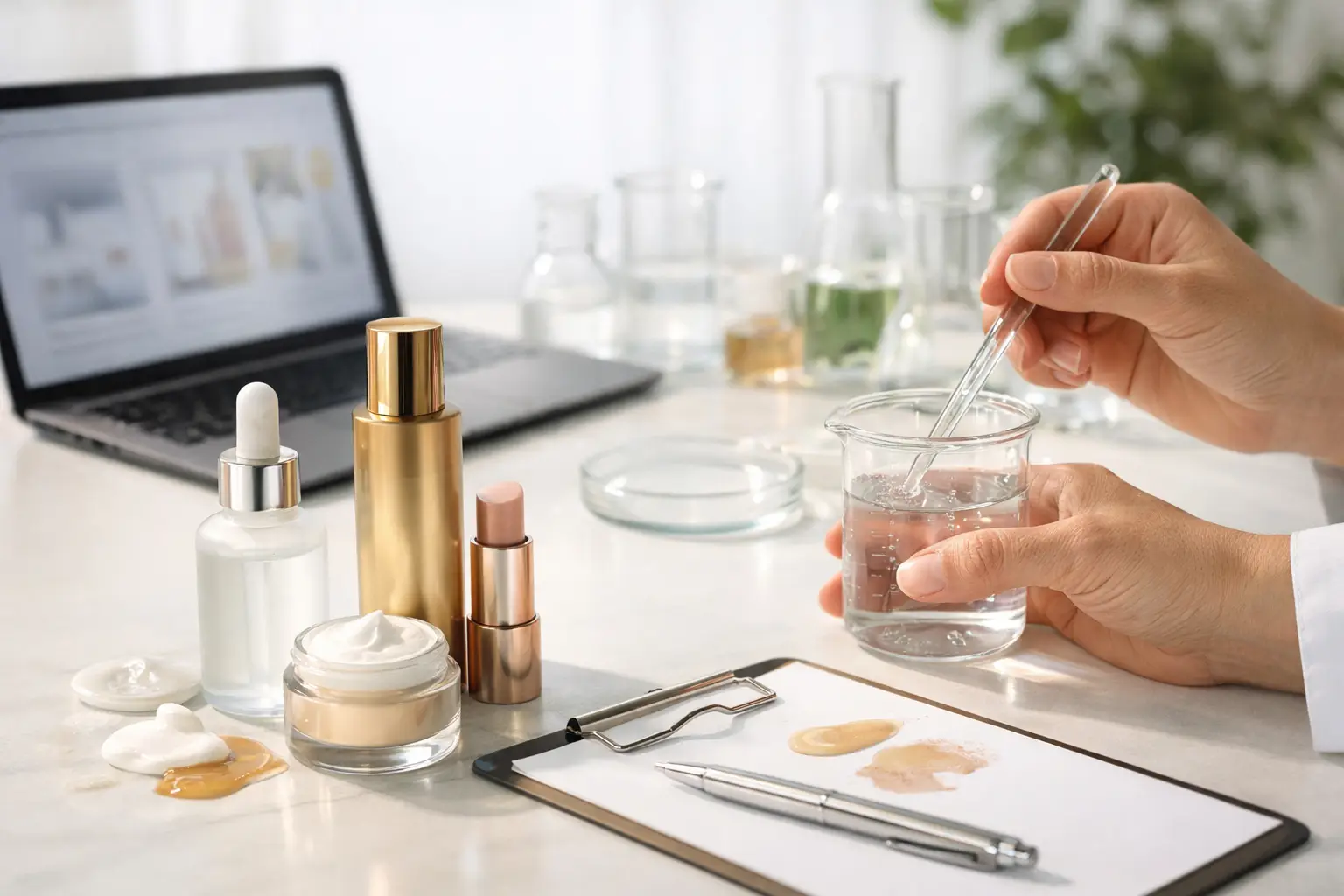
A great beauty product rarely starts with a formula alone. It usually starts with a gap in the market, a founder’s point of view, or a very specific customer need that existing products are not meeting. That is what makes the question what is beauty product development so valuable for new brands and growing businesses. It is not just the act of making a cream, serum, lipstick, or fragrance. It is the full process of turning a concept into a finished product that is desirable, manufacturable, compliant, and ready to sell.
For founders, salon owners, and established beauty businesses, that distinction matters. A product can sound exciting on paper and still fail in sampling, run into packaging issues, miss regulatory requirements, or arrive at market with no clear reason for consumers to choose it. Beauty product development exists to prevent that. When done well, it gives structure to creativity and turns ambition into execution.
What Is Beauty Product Development in Practice?
In practice, beauty product development is the end-to-end process of creating a cosmetic product from idea to market launch. It includes product strategy, formulation, ingredient selection, claims alignment, sample revisions, packaging development, compliance review, manufacturing planning, and final production.
This process applies across skincare, makeup, haircare, body care, and fragrance, but the path looks slightly different depending on the category. A facial serum may require careful work around texture, stability, and active ingredient compatibility. A lipstick may depend heavily on color payoff, glide, and packaging fit. A fragrance may center on scent architecture, concentration, and regional compliance. The principle stays the same: every decision must support both product performance and commercial success.
That is why beauty product development is both creative and technical. It is where brand positioning meets chemistry, packaging engineering, testing, operations, and market timing.
Beauty Product Development Is More Than Formulation
One of the most common misconceptions is that development begins and ends in the lab. In reality, formulation is only one stage.
Before a lab starts developing samples, there should be a clear product brief. That brief usually defines the product type, target customer, key benefits, price positioning, texture expectations, ingredient preferences, packaging direction, and launch goals. Without that foundation, development can become expensive trial and error.
From there, formulation work begins. Chemists create a base concept aligned with the brief, then refine it through rounds of sampling and feedback. But even an excellent formula is not enough on its own. It still needs to remain stable over time, work with the selected packaging, support the intended claims, and fit the realities of manufacturing at scale.
This is where many first-time founders underestimate the complexity. A sample that performs beautifully in a small batch may behave differently in production. A packaging choice that looks premium may not be compatible with a formula’s viscosity. A trending ingredient may sound attractive in marketing but create sourcing, cost, or stability challenges. Development is the process of solving those issues before they become costly problems.
The Main Stages of the Process
Most beauty product development projects move through a sequence, even if timelines and details vary.
The first stage is strategy. This is where the concept is defined clearly enough to guide every later decision. Good strategy answers practical questions: Who is this product for? What problem does it solve? Where will it sit in the market? Why would a retailer, salon, or end customer choose it over alternatives?
The second stage is formulation and prototype creation. A manufacturer or development partner translates the concept into physical samples. This often involves multiple rounds of adjustments to texture, scent, shade, performance, finish, or skin feel.
The third stage is testing and validation. Depending on the product, this can include stability testing, compatibility checks, microbiological review, and other assessments needed to confirm the formula is suitable for market. Claims and compliance also need to be handled carefully here. Founders often want strong marketing language, but the right claims depend on what can be supported legally and technically.
The fourth stage is packaging development. This includes component sourcing, artwork, labeling, decoration, and practical fit with the formula. Packaging has to do more than look polished. It needs to protect the product, support the user experience, and meet market requirements.
The fifth stage is manufacturing and scale-up. Once the formula and packaging are approved, production planning begins. This includes raw material sourcing, batch manufacturing, filling, assembly, quality control, and delivery preparation.
Finally, there is launch readiness. A product may be technically complete but still not commercially ready if lead times, inventory planning, certification needs, or logistics have not been addressed. Strong development includes operational thinking from the start.
Why the Process Matters So Much
Beauty is a crowded category, but the challenge is not simply competition. It is execution. Consumers expect products to feel refined, perform consistently, and look premium from the first touchpoint. Retailers and distributors expect reliability. Founders need margins, compliance, and repeatable production.
That is why beauty product development matters beyond the lab bench. It reduces risk. It helps prevent reformulations caused by packaging failures, launch delays caused by missing documentation, and unnecessary spending on concepts that were never properly validated.
It also creates differentiation. In a market full of similar claims, small details make a big difference. Texture can set a skincare product apart. Fragrance character can shape perceived luxury. Applicator choice can elevate a makeup item. Packaging weight, closure quality, and finish can influence whether a brand feels entry-level or premium. Development brings those details into alignment.
For businesses entering beauty without internal technical teams, this process is especially important. It gives structure to decisions that would otherwise be difficult to manage in-house.
What Makes a Beauty Product Development Project Successful?
Success usually comes down to alignment. The strongest products align brand vision, consumer demand, technical feasibility, and production reality.
A beautiful concept is not enough if the formula cannot be manufactured consistently. A highly innovative formula is not enough if the retail price no longer works. A fast launch is not always a win if the product reaches market before testing, packaging, or documentation are properly handled.
This is why trade-offs are part of the process. If speed is the priority, a semi-custom or private-label route may make sense. If uniqueness is the priority, custom development may be the better path, but the timeline is usually longer. If premium packaging is central to the brand, minimum order quantities and component lead times may influence what is possible in the first launch phase.
The right answer depends on the business model, budget, category, and growth plan. There is no single ideal route for every brand.
Why Founders Often Work With a Development Partner
Many founders do not need to build an internal lab, sourcing team, regulatory department, packaging function, and manufacturing network. They need a partner who already has that infrastructure and can guide the project from concept to finished product.
That is where a full-service development model becomes valuable. Instead of coordinating separate vendors for formula, packaging, compliance, and production, the brand works through one structured process with clear stages and accountability. This reduces complexity and helps maintain consistency across the project.
For a founder, that often means better decision-making. You can evaluate whether a concept is commercially viable before overinvesting in it. You can compare custom and white-label options more realistically. You can develop with a clearer understanding of lead times, testing requirements, and production thresholds.
For a salon or established beauty business, it means expanding into product with less operational strain. For an emerging brand, it means moving faster with more confidence.
This is also where global manufacturing expertise can matter. Different markets and production hubs bring different strengths in skincare innovation, packaging refinement, fragrance craftsmanship, or premium cosmetic execution. A partner with access to those capabilities can help match the product vision to the right manufacturing strategy.
What to Think About Before You Start
If you are considering a new beauty product, start by being clear on your commercial goal. Are you building a hero product for a new brand launch, expanding an existing range, creating a retail product for a salon, or testing demand with a lower-risk line extension? The answer affects almost every development decision.
It also helps to define what must be unique. Sometimes that is the formula. Sometimes it is the packaging, the positioning, the fragrance signature, or the speed to market. Not every product needs to be reinvented from scratch, but every product should have a reason to exist.
A partner like Arwalabs can help translate that vision into a practical development path, especially when the goal is to launch with premium quality and strong execution rather than manage the complexity internally.
Beauty product development is, at its best, the discipline of making a brand idea real without losing sight of quality, compliance, or commercial fit. If you approach it with the right strategy, the process stops feeling overwhelming and starts becoming the foundation of a product people will actually want to buy again.