
What Is Product Development in Beauty?
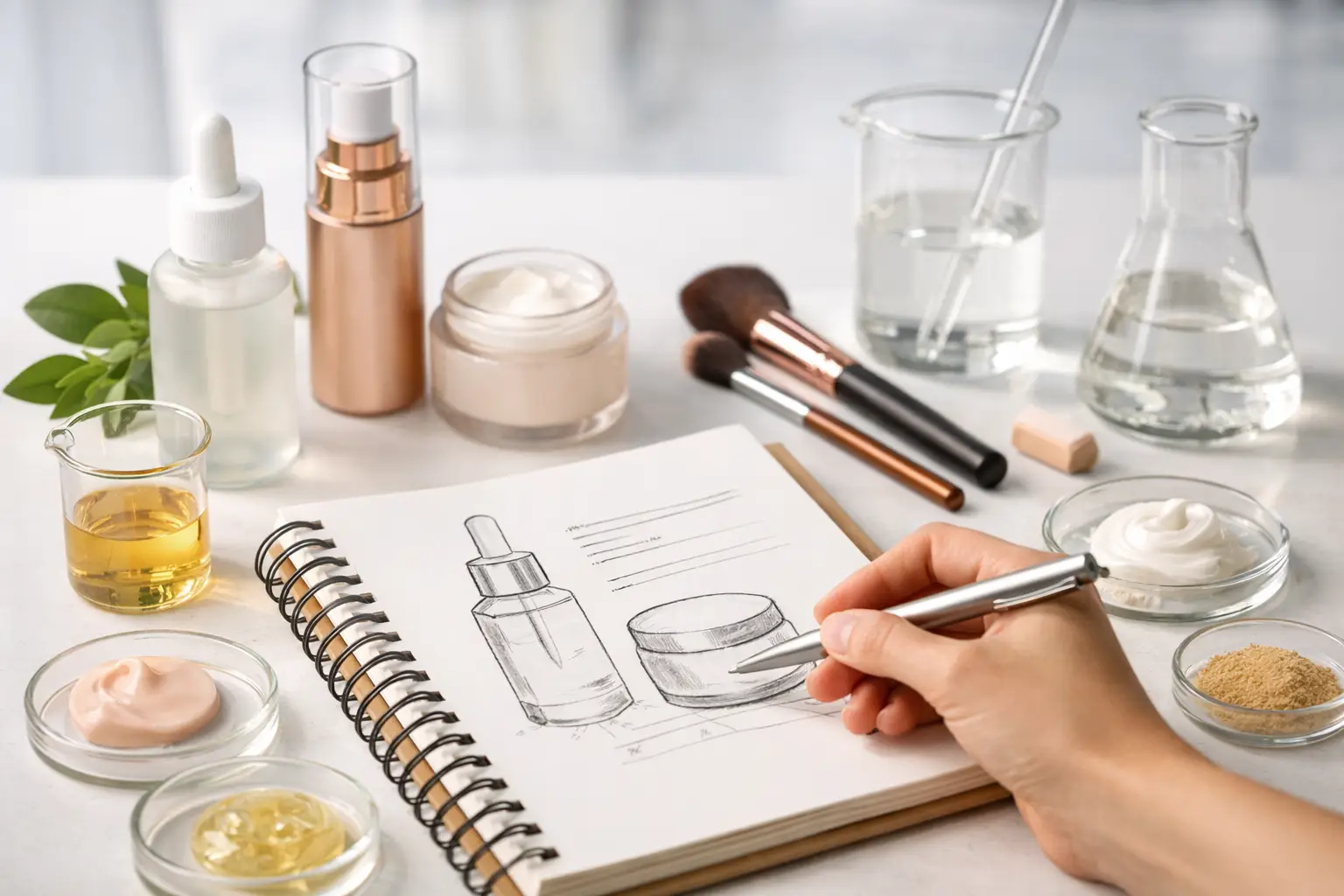
A strong beauty idea can feel complete in your head long before it is ready for a shelf. The gap between inspiration and a product customers trust is where product development happens. If you are asking what is product development, the short answer is this: it is the structured process of turning a concept into a viable, tested, manufacturable, and market-ready product.
In beauty, that process is more demanding than many founders expect. A face serum is not just a formula. It is ingredient strategy, texture, stability, packaging compatibility, claims support, regulatory alignment, production planning, and customer experience – all working together. When those pieces are handled well, a product feels effortless to the buyer. Behind the scenes, it is anything but accidental.
What Is Product Development?
Product development is the end-to-end process of creating a new product or improving an existing one so it can succeed in the market. In cosmetics, that usually begins with a brand concept or market opportunity and moves through formulation, sampling, testing, packaging, compliance, manufacturing, and launch preparation.
This is where many beauty founders make an early mistake. They assume product development means choosing a scent, a shade, or a hero ingredient. Those choices matter, but they are only one part of a much larger system. A beautiful concept without technical execution rarely becomes a stable, compliant, profitable product.
A more useful way to think about product development is as decision-making under real-world constraints. You are balancing brand vision, target customer, budget, minimum order quantities, timeline, regulations, ingredient availability, and manufacturing realities. The best outcomes come from aligning those factors early rather than fixing problems later.
Why Product Development Matters So Much in Beauty
Beauty products live at the intersection of performance, trust, and presentation. Customers expect visible results, a premium feel, safe usage, and packaging that reflects the brand promise. If one element is off, the entire product can suffer.
Take a moisturizer as an example. A founder may want a lightweight formula with a luxurious finish, a clean ingredient story, fast absorption, and premium glass packaging. That sounds straightforward until the formula reacts poorly with the packaging, the texture changes in different climates, or the selected active ingredients push the cost beyond the target margin. Product development exists to solve those tensions before launch.
This is also why speed alone is not the goal. Fast development can be valuable, but only if the product still holds up in testing, production, and customer use. Rushing a launch may save weeks upfront and cost months later in reformulation, complaints, or compliance issues.
What Is Product Development in Practice?
In practice, product development follows a sequence. The details vary by category, but the logic is consistent: define the opportunity, build the product, validate it, then prepare it for scale.
1. Concept and market direction
Every successful product starts with a clear position. Who is it for? What problem does it solve? Why would someone choose it over dozens of alternatives?
For beauty brands, this stage often includes trend analysis, category positioning, pricing strategy, and product architecture. A founder may know they want to launch skincare, but not whether the smarter first move is a cleanser, serum, mask, or targeted treatment. Product development helps narrow that decision based on demand, differentiation, and operational feasibility.
2. Formula development
This is the stage most people picture first, and it is central – but it is not standalone. Formula development involves selecting ingredients, defining texture, performance, sensory profile, color, fragrance, and intended claims. It can begin from scratch as a custom development project or from a white-label base adapted to fit a brand strategy.
There are trade-offs here. A highly innovative formula may require more time, testing, or cost. A faster route may rely on an existing base with customization around fragrance, actives, or finish. Neither approach is automatically better. It depends on your positioning, timeline, and how much uniqueness your market truly requires.
3. Sampling and refinement
Once prototypes are created, the product needs feedback. Founders review texture, spreadability, absorption, payoff, wear, fragrance, shade accuracy, and overall fit with the brand. This stage often takes several rounds.
Refinement is where good products become stronger. Sometimes the issue is obvious, like a formula that feels too heavy. Sometimes it is subtle, like packaging that looks premium online but feels underwhelming in hand. Product development teams help interpret those details through both technical and commercial lenses.
4. Testing and compliance
A cosmetic product is not ready because it looks good in a sample jar. It needs the right testing and documentation for its intended market. Depending on the product and region, that may include stability testing, compatibility testing, microbiological assessment, safety review, and support for claims.
This stage can frustrate first-time founders because it feels less visible than branding or packaging. Yet this is where risk is reduced. Compliance is not an administrative afterthought. It is part of building a product that can be sold with confidence.
5. Packaging development
Packaging does more than carry the formula. It protects the product, shapes first impressions, affects usability, and influences cost structure. A pump that dispenses poorly or a component that leaks can damage customer trust even if the formula itself is excellent.
In beauty, packaging development includes material selection, component sourcing, decoration, labeling, and compatibility with the formula. Founders often want packaging that feels elevated and distinctive, which is smart. The key is making sure the visual ambition works operationally at production scale.
6. Manufacturing and scale-up
A formula that performs well in a lab sample still needs to be manufactured consistently. Scale-up means adapting the product for production conditions, quality control standards, and batch consistency.
This is where experienced partners add real value. Manufacturing is not simply making more of the same product. Heat sensitivity, mixing order, filling methods, and lead times can all affect results. A strong development process anticipates those realities before the first production run.
7. Launch readiness
By this point, the product itself may be ready, but the business still needs supporting pieces: production scheduling, documentation, packaging delivery, logistics, and launch timing. Product development reaches beyond formulation because a finished product is only truly finished when it is ready to enter the market.
What Founders Often Underestimate
Many beauty entrepreneurs underestimate how interconnected each decision is. Change one element and several others may shift with it. A new active ingredient can affect cost, claims, testing, and shelf life. A switch to a premium package can alter fill volume, freight costs, and minimum order requirements.
Another common misconception is that product development should begin only after the brand identity is fully complete. In reality, brand and product often need to evolve together. Your packaging choices may influence your price point. Your formula strategy may sharpen your brand message. The process works best when creative and technical decisions inform each other.
This is one reason turnkey support matters. When concept, formula, packaging, compliance, manufacturing, and logistics are managed in coordination, founders avoid the fragmentation that slows launches and creates unnecessary risk. For brands entering premium skincare, makeup, or fragrance, that level of integration can make the difference between a promising idea and a commercially viable line.
How to Know If Your Product Development Process Is Working
A healthy product development process creates clarity, not confusion. You should know what stage you are in, what decisions are pending, what trade-offs exist, and what is required before launch. The process should reduce guesswork while preserving your brand vision.
It should also produce a product that makes sense commercially. That means the formula is aligned with the target customer, the packaging supports the positioning, the margin structure is realistic, and the operational path to production is clear. A product that looks impressive in a sample review but cannot scale profitably is not truly developed.
For many founders, the right partner becomes part of the product strategy itself. A team with experience across formulation, sourcing, compliance, and manufacturing can spot issues early and guide smarter decisions from the start. That is especially valuable in beauty, where premium expectations are high and market competition is constant.
If you are building a beauty brand, product development is not a side task between branding and sales. It is the discipline that turns your idea into something customers can experience, trust, and buy again. And when that process is handled with precision, your product does more than launch – it gives your brand a foundation worth building on.