
What a Custom Cosmetic Formulation Lab Does
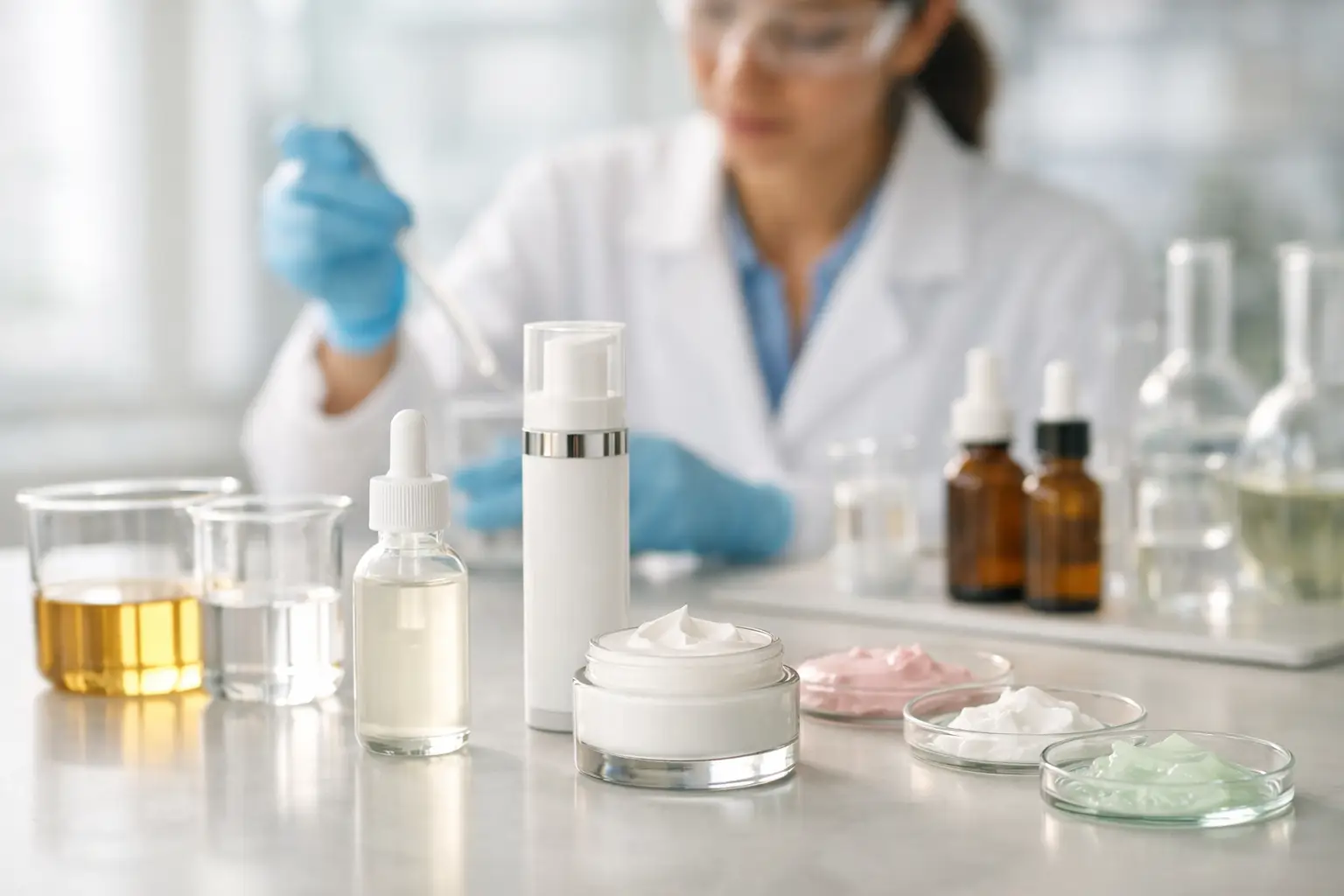
A serum idea written in a notebook is not a product. Neither is a mood board, a trending ingredient list, or a sample you liked from another brand. The bridge between concept and something a customer can buy, trust, and reorder is usually a custom cosmetic formulation lab.
For founders, salon owners, and growing beauty brands, that distinction matters. The right lab does far more than mix ingredients. It helps shape product positioning, build formulas around performance and claims, test for stability and compatibility, and prepare a product for manufacturing at commercial scale. If you want a beauty line that feels credible in the market and workable behind the scenes, the lab stage is where much of that success is decided.
Why a custom cosmetic formulation lab matters
A crowded beauty market makes originality valuable, but originality alone is not enough. A product also has to be stable, safe, manufacturable, and aligned with your price point. This is where many early concepts start to shift. The texture you imagined may require a different emulsifier system. The natural profile you want may affect preservation strategy. The luxury feel you are aiming for may change both ingredient selection and packaging compatibility.
A custom cosmetic formulation lab helps you make those decisions before expensive mistakes happen. Instead of forcing your concept into a generic stock base, the lab develops a formula around your brand goals, target customer, channel, and operational realities. That often includes questions founders do not initially think to ask, such as how the product behaves after shipping, whether the fragrance alters over time, or how the formula responds in an airless pump versus a glass dropper.
This is also where your differentiation becomes tangible. Many beauty brands can describe a vision well. Fewer can translate that vision into texture, sensorial payoff, efficacy story, and repeatable quality. A serious lab turns branding language into formulation decisions.
What happens inside a custom cosmetic formulation lab
The process usually starts with a development brief. This is where the lab learns what you want to create, who it is for, what claims matter, what markets you plan to enter, and what constraints exist around budget, timeline, certification goals, or ingredient exclusions. A strong brief is not only creative. It is commercial.
Once direction is clear, formulators begin building samples. This stage is part science, part interpretation. If you ask for a lightweight moisturizer with a premium afterfeel and visible brightening support, there are multiple ways to approach that goal. One route may favor speed and cost efficiency. Another may prioritize a more sophisticated sensory profile. Another may support stronger marketing storytelling. None is automatically right. It depends on what the product needs to achieve in your brand portfolio.
After initial prototypes, feedback becomes critical. This is rarely a one-sample process. Texture, spreadability, absorption, scent, viscosity, finish, and color may all be adjusted. In makeup and fragrance, refinement can be even more iterative because shade payoff, wear, balance, and identity are highly subjective. The lab guides these revisions so the product gets closer to market fit without losing technical integrity.
Then comes the less glamorous but essential work: stability, compatibility, and performance testing. A formula that feels excellent on day one can separate, discolor, lose fragrance character, or react with packaging over time. Testing helps identify those risks before production. For brands planning to sell across multiple regions, regulatory and documentation requirements also start influencing the path forward.
The difference between custom development and private label
Not every brand needs fully custom development. Sometimes private label is the right commercial decision, especially if speed to market matters more than creating a proprietary formula from scratch. But when a founder wants stronger distinction, a custom cosmetic formulation lab becomes far more valuable.
Custom development gives you greater control over texture, actives, claims direction, fragrance profile, and brand identity. It also allows the product to be built with your specific customer in mind rather than adapted from a general-use base. That can create a more defensible brand position, especially in premium skincare, distinctive makeup concepts, or fragrance lines where identity is central.
The trade-off is time, complexity, and usually a higher development investment. A custom formula may require more rounds, more testing, and more decision-making. For some businesses, that is absolutely worth it. For others, a hybrid strategy works better – launching with selected private-label products while developing a flagship custom SKU that defines the brand.
Choosing the right custom cosmetic formulation lab
Not all labs are built for the same type of client. Some are highly technical but difficult for founders to navigate. Others are good at sampling but weaker in scale-up, documentation, or production planning. The right partner should connect formulation with execution.
That means asking practical questions early. Can the lab support your category, whether skincare, makeup, or fragrance? Do they understand your target market and compliance path? Can they guide packaging compatibility and manufacturing feasibility, not just ingredient aesthetics? Can they move from formula to production without losing consistency?
Experience across international manufacturing environments can also be a major advantage. Different production regions bring different strengths in innovation, texture sophistication, fragrance craftsmanship, and premium finishing. For a brand that wants both creativity and reliability, a development partner with access to multiple cosmetic hubs can widen your options without forcing you to manage separate vendors on your own.
Communication style matters too. Founders often need education alongside execution. You should be able to discuss ideas commercially, not only technically. If a lab cannot explain trade-offs clearly, decision-making becomes slower and more expensive.
From prototype to production
One of the biggest misunderstandings in beauty development is assuming that a good lab sample automatically becomes a good production batch. Scale changes things. Mixing methods, heating phases, filling conditions, raw material sourcing, and batch-size variables can affect performance. A capable lab accounts for manufacturability from the beginning.
This is where full-service development becomes especially valuable. If the same partner can oversee formula refinement, packaging selection, compliance coordination, manufacturing, and launch planning, you reduce handoff risk. The formula is not being passed from one silo to another with room for interpretation or delay.
For founders and salon businesses, this creates clarity. Instead of managing a chemist, packaging supplier, testing provider, manufacturer, designer, and logistics network separately, you move through a connected process. That does not remove every challenge, but it keeps the project organized and commercially realistic.
At Arwalabs, this integrated model is central to how brands move from concept to shelf. The goal is not simply to create a formula that looks good in development. It is to build a product that can be produced, packaged, certified, and delivered as a credible brand asset.
What founders should prepare before approaching a lab
The better your inputs, the better your development process tends to be. You do not need to know cosmetic chemistry, but you do need clarity on your business direction. A lab can help shape the product, but it should not have to invent your brand strategy from zero.
Come prepared with your category focus, target customer, desired price position, preferred product size, and any must-have or excluded ingredients. Reference products can help, but use them carefully. Saying you want a texture similar to one moisturizer and the sensorial finish of another gives direction. Asking for an exact duplicate usually creates legal, ethical, and technical problems.
You should also know what matters most if compromises arise. Is your priority speed? Margin? Premium feel? A clean positioning? Specific claims support? It is rare to maximize every variable at once. Clear priorities help the lab recommend the right path faster.
The real value of a custom cosmetic formulation lab
A custom cosmetic formulation lab is not only a technical resource. It is a strategic filter between ambition and execution. It helps you test whether your idea works in the real world, not just in branding language. It protects quality, timelines, and market credibility in ways that are easy to underestimate at the start.
For beauty brands that want more than a generic launch, that matters. The products customers remember are rarely accidental. They are the result of careful choices made early – in the formula, in the testing, in the packaging fit, and in how the whole concept is prepared for scale.
If you are building a brand with long-term ambitions, choose a partner that can turn creative direction into a product people will actually want to use again. That is where momentum begins.