
Beauty Product Development That Sells
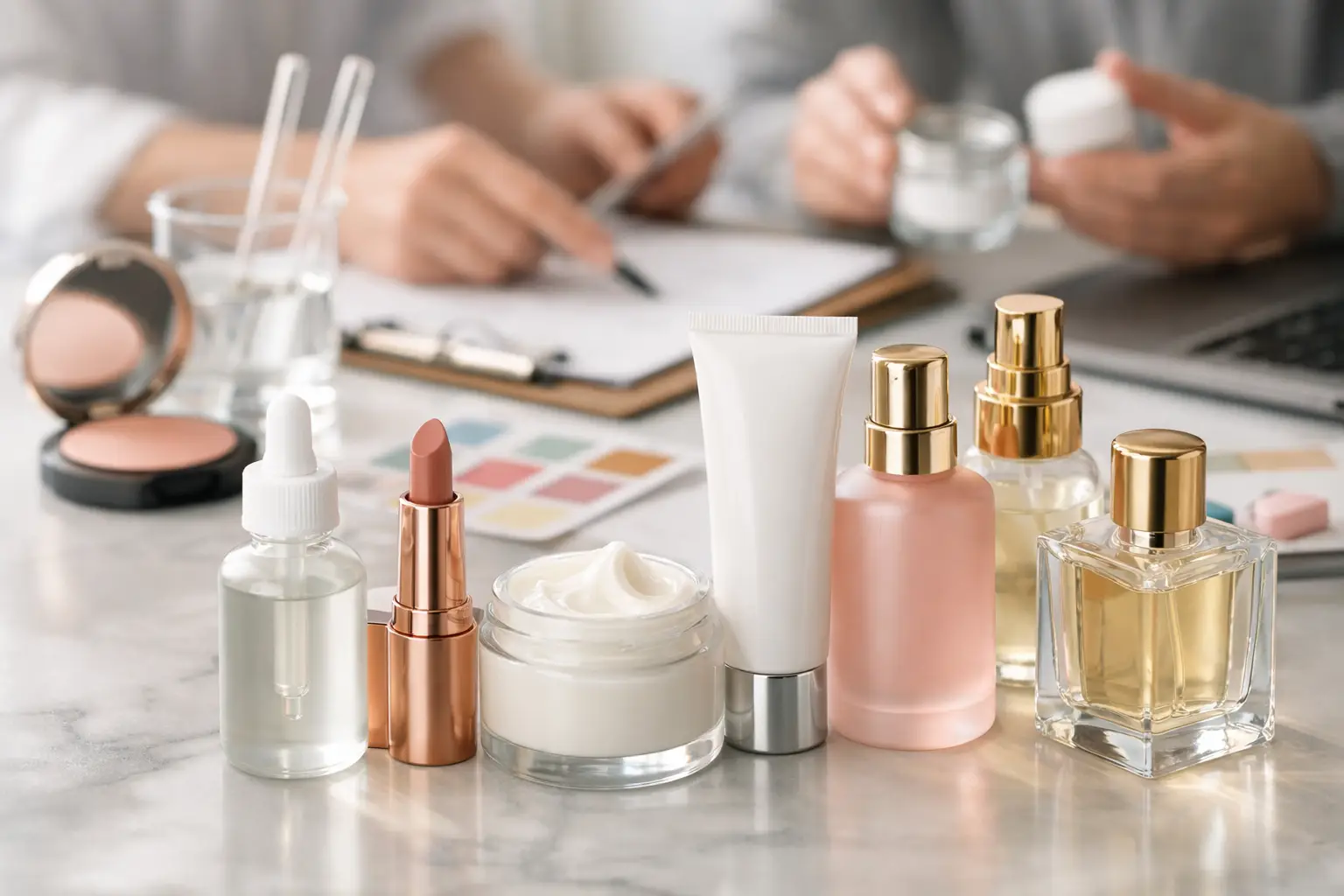
A serum idea can feel market-ready in your head long before it is ready for a shelf. That gap is where beauty product development either creates momentum or quietly drains budget, time, and confidence. For founders, salon owners, and growing beauty businesses, the difference usually comes down to process – not just creativity.
The market rewards brands that feel clear, credible, and finished. Customers may discover a product because of a trend, but they come back because the formula performs, the packaging feels right, and the product experience matches the promise. That is why product development is not a back-office step. It is the commercial foundation of the brand.
What beauty product development actually includes
Many first-time founders assume development starts with choosing a formula and ends with manufacturing. In reality, beauty product development is a coordinated sequence of decisions that shape the product, the positioning, and the path to market.
It starts with the concept itself. What category are you entering? Who is the customer? What claim is realistic and supportable? A brightening moisturizer for a premium clinic audience requires a different development path than a fast-moving lip oil for trend-driven retail. Both can succeed, but they need different textures, packaging priorities, cost structures, and launch plans.
From there, formulation becomes one part of a larger system. Ingredient compatibility, sensory profile, stability, regulatory considerations, target price, pack type, fill method, and minimum order quantities all affect one another. Change the bottle, and you may need to change viscosity. Change the fragrance level, and you may affect testing or skin feel. Development is rarely linear because beauty products are built through interdependent choices.
Why strong development matters before manufacturing
A product can be beautiful in sample form and still fail commercially. This is one of the most expensive lessons in the industry.
A founder may love a prototype because it feels luxurious, but if the formula is too costly to scale, margin disappears. A salon owner may want a custom mask line quickly, but if the packaging lead time is longer than the planned launch window, the entire rollout slips. An established brand may want to expand into fragrance, but if the positioning overlaps too closely with existing competitors, the new product enters the market without enough distinction.
This is why development should be treated as strategic planning with technical execution built in. You are not only asking, Can we make this? You are asking, Should we make it this way, at this cost, for this customer, in this timeline?
That shift matters. It protects the brand from avoidable rework and gives the launch a better chance of holding up once real customers, retailers, and distributors are involved.
The stages of beauty product development
The most effective beauty product development process moves in structured stages, even when creativity is a major part of the work.
Concept and market direction
This first stage clarifies what the product is supposed to do for the business, not just for the skin or the makeup bag. A hero SKU intended to establish a brand needs broad appeal and a clear message. A niche product can be more specific, but it still needs a defined audience.
Trend awareness is useful here, but chasing trends without brand logic usually creates short-lived products. A better approach is to identify where market demand, brand identity, and operational feasibility overlap. That is where products have a stronger chance of scaling.
Formula development and sampling
Once the concept is defined, formulation work begins. This is where performance, texture, fragrance, finish, and ingredient story start taking shape in a tangible way. Early samples are not only for approval. They are used to test whether the initial concept translates into a product experience people will actually want.
This stage often involves refinement. A cleanser may need a softer after-feel. A foundation may need better spreadability. A fragrance may need a stronger opening or a more elegant dry-down. Small changes can make a major difference, but every change also affects timing and cost. That is why experienced guidance matters.
Packaging and product presentation
In beauty, packaging is never secondary. It affects perception, protection, logistics, and compliance all at once. Premium positioning may require custom components or elevated decoration, but those choices must still align with production timelines and shipping realities.
Packaging should support the product formula and the customer experience. A thick balm in an airless pump may create filling challenges. A glass bottle may look elevated but increase freight complexity. The right packaging decision is rarely about appearance alone.
Testing, compliance, and approvals
This stage is where many brands realize how much hidden work exists behind a finished product. Depending on category and market, testing and documentation can include stability review, compatibility checks, safety assessments, labeling review, and market-specific requirements.
This is also where discipline matters most. Founders often want to accelerate the process, especially when momentum is high, but rushing compliance work creates bigger delays later. A product is only truly ready when it is both appealing and properly prepared for sale.
Production and launch readiness
Once approvals are in place, manufacturing can move forward with far more confidence. At this point, development shifts from decision-making to execution. Production planning, component coordination, filling, assembly, and quality control all need to operate against the same commercial objective: a finished product that arrives on time and reflects the brand accurately.
A smooth launch depends on more than having inventory. The product must be consistent, properly documented, correctly labeled, and ready for the channels where it will be sold.
Where founders often lose time and budget
Most delays in beauty do not come from one dramatic mistake. They come from a series of small assumptions.
One common issue is starting with an idea that is too vague. Wanting a clean luxury serum is not yet a development brief. Without defined positioning, target customer, benchmark expectations, and price architecture, sampling can become a long cycle of subjective revisions.
Another issue is underestimating packaging timelines. Components, decoration methods, and sourcing regions all affect lead times. Founders often focus heavily on the formula and only later realize that the outer packaging or primary component is pacing the entire launch.
There is also a recurring tension between customization and speed. Fully custom development creates stronger brand distinction, but it usually takes longer than adapting a proven base or private-label framework. Neither path is automatically better. It depends on your growth stage, budget, and market strategy. A new founder may benefit from launching faster with a smart, well-positioned product before investing in more complex customization. A mature brand may need greater originality to protect its market position.
What a strong development partner changes
The right partner does more than produce samples. They bring structure to a process that can otherwise become fragmented across formulators, packaging suppliers, compliance consultants, and manufacturers.
That matters because beauty brands do not grow through isolated decisions. They grow through coordinated execution. A development partner should be able to evaluate the full picture – concept strength, formulation feasibility, cost targets, packaging fit, regulatory pathway, manufacturing readiness, and logistics implications.
For businesses entering the category without in-house technical teams, this support can significantly reduce risk. It gives founders clearer decisions earlier, which usually means fewer revisions later. It also creates a more credible path from idea to launch, especially when premium quality and international market readiness are priorities.
This is where a turnkey model becomes especially valuable. When one team can guide the process from concept through production, there is more continuity, better accountability, and less room for expensive disconnects. At Arwalabs, that integrated approach is designed to help clients move from ambition to execution with clarity.
Building for launch, not just for approval
One of the best ways to think about development is this: do not build a product to get approved internally. Build it to succeed externally.
That means pressure-testing the concept against real commercial conditions. Will the product still make sense at the required order volume? Will the packaging hold up through shipping and storage? Will the claims feel compelling without creating compliance issues? Will the product earn repeat purchase, not just first purchase?
The strongest brands treat development as part of business building, not just product creation. They understand that formula, packaging, positioning, and operations all shape how the market receives the brand.
A good idea can start a beauty business. Thoughtful development is what gives it staying power. If you approach the process with clear standards, realistic trade-offs, and the right technical support, you are far more likely to bring something to market that feels polished from day one – and built to grow after that.