
Makeup Product Development That Sells
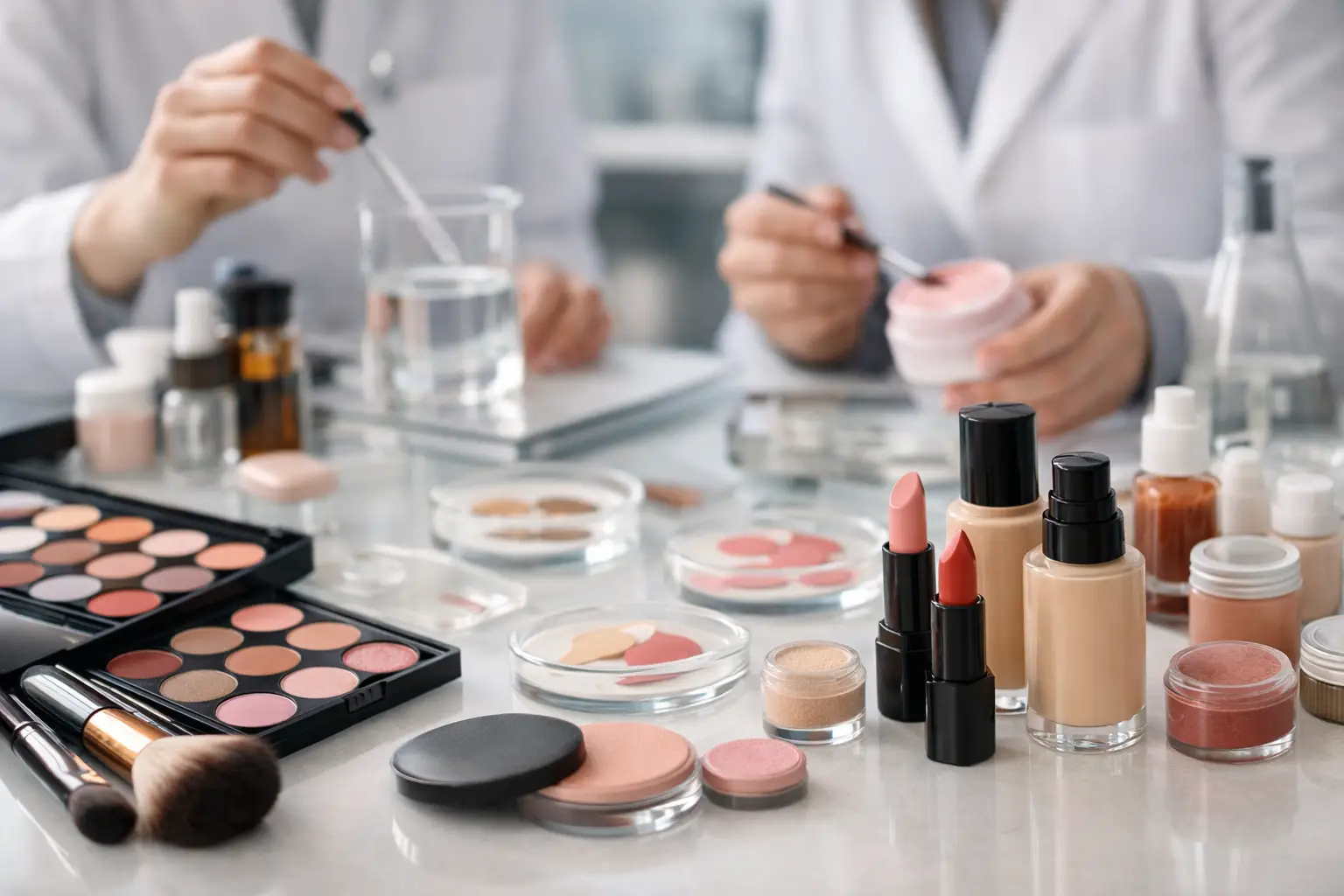
A great makeup idea can lose momentum fast when it meets the real work behind launch. Shade accuracy, texture, stability, packaging fit, claims support, production minimums, and compliance all need to line up at the same time. That is why makeup product development is not simply about making a formula. It is about building a product that performs well, fits your brand, meets regulatory expectations, and can be produced consistently at scale.
For founders, salon owners, and growing beauty businesses, that distinction matters. A product that looks promising in a sample jar is not the same as a product that can survive filling, shipping, shelf life, retail scrutiny, and customer expectations. The brands that move with confidence usually start with a clear development process rather than chasing trends one decision at a time.
What makeup product development really involves
In practical terms, makeup product development is the structured path from concept to finished product. It starts with a market opportunity and ends with a retail-ready item that can be manufactured reliably. Between those points sits a surprisingly detailed sequence of decisions – formula design, ingredient selection, shade planning, packaging compatibility, testing, claims direction, artwork, production setup, and launch preparation.
Each category has its own pressure points. A lip oil needs the right balance of shine, cushion, flavor profile, and applicator performance. A foundation has to deliver coverage, feel, oxidation control, and shade consistency. A mascara may look straightforward on paper, but brush choice, viscosity, transfer resistance, and preservative strategy can change the entire user experience.
This is where many new brands underestimate the process. They focus on the visible part of the product – the color, the finish, the container – while the commercial success often depends on what happens behind the scenes. Can the formula remain stable in heat? Does the component work cleanly over repeated use? Can the product be scaled without changing performance? Those questions define whether development stays efficient or becomes expensive.
Start with product strategy, not just inspiration
Strong products usually begin with a precise brief. Not a vague ambition like create something premium, but a real commercial direction. Who is the customer? What price point makes sense? Where will the product be sold? What is the hero benefit? What existing products are you trying to outperform or differentiate from?
That early strategy affects everything that follows. A prestige complexion product for boutique retail will likely require a different formula path, packaging standard, and margin structure than a salon-exclusive lip line or a social-first beauty launch. Even when two brands want the same category, their development route may be completely different because their customer, positioning, and sales model are different.
Trend analysis belongs here too, but it should be handled carefully. Trends can accelerate demand, but they can also shorten a product’s lifespan if they are copied too literally. The better approach is to identify what customers are responding to – skin-like finishes, hybrid makeup-skincare textures, refillable packaging, high-performance pigments – and then translate that demand into a product that still feels ownable for your brand.
Formula development is where the brand becomes tangible
Once the brief is clear, formulation begins turning brand positioning into product reality. This stage is both technical and creative. The lab is not just trying to make something that works. It is trying to make something that feels distinctly right for your customer.
Texture is often the first major decision point. Consumers may describe a product as creamy, weightless, blurred, velvety, glossy, soft matte, or serum-like, but each of those words has technical implications. Ingredient systems, pigment dispersion, wear profile, payoff, and dry-down all need to support the promised experience.
There are trade-offs. A very long-wear formula may not feel as flexible or conditioning as a more emollient one. An ultra-clean aesthetic may narrow certain formulation options. A highly saturated pigment system may require extra attention to staining, migration, or packaging compatibility. Good development partners make those trade-offs visible early, so a founder can choose intentionally instead of being surprised later.
Sampling and revisions are normal. In fact, they are healthy. The first sample is rarely the final one because real product development is iterative. Teams assess shade, performance, glide, scent if relevant, visual appeal, and alignment with the original brief. Adjustments are then made before moving toward a formula that is ready for validation.
Packaging can strengthen or weaken the product
Packaging is not a finishing touch. In makeup, it is part of product performance. A poor component can create leakage, drying, inconsistent dispensing, breakage, or a lower perceived value than the formula deserves.
The right packaging choice depends on formula behavior, brand positioning, and commercial goals. A stick product needs reliable twist-up function and structural stability. A liquid concealer needs an applicator that controls dosage and gives a clean user experience. A pressed powder needs pan integrity, closure security, and compact quality that feels credible in hand.
This is also where budget and ambition have to meet realistically. Custom packaging can make a brand more distinctive, but it adds time, cost, and development complexity. Stock components can reduce speed-to-market pressure, though they require sharper branding and design choices to avoid looking generic. Neither route is inherently better. It depends on launch timing, margin targets, and how much differentiation you need from day one.
Testing, compliance, and scale are not back-office details
A common mistake is treating testing and compliance as something to handle after the product is basically done. In reality, they should be considered throughout development. Claims, ingredient restrictions, documentation, labeling requirements, and market-specific expectations all affect the path to launch.
For businesses selling across regions, this becomes even more important. Standards, required files, and claim language can vary. What sounds marketable in a brainstorm still needs to be supportable in practice. Products also need the right testing pathway for their format and intended use, whether that involves stability review, compatibility assessment, or other validation steps needed before production.
Scale introduces another layer. A formula that performs beautifully in a small bench sample must still behave correctly during manufacturing. Mixing parameters, fill temperatures, bulk handling, pigment consistency, and batch reproducibility all matter. If these factors are not considered early, the product can change when it moves from sample to production, which is one of the most frustrating setbacks for any founder.
This is why experienced manufacturing oversight matters. It reduces the gap between the formula you approved and the product your customer receives.
Why the right development partner changes the outcome
For most founders and beauty businesses, building internal R&D, sourcing, packaging, compliance, and production capabilities from scratch is not the best use of time or capital. The stronger move is usually to work with a partner that can organize the full process and keep each decision connected to the commercial goal.
That support should go beyond making samples. It should help shape product direction, clarify feasibility, manage revisions, coordinate packaging, prepare for manufacturing, and support launch readiness. When those functions are fragmented across multiple vendors, the founder often becomes the project manager, technical translator, and quality control department all at once.
A full-service model simplifies that pressure. It creates a cleaner route from idea to execution, especially for brands that want premium positioning without building an in-house operation. At Arwalabs, this kind of integrated process is central to how beauty concepts move from ambition to finished products, supported by global manufacturing expertise across major cosmetic hubs.
How to approach makeup product development with fewer delays
The brands that develop more efficiently tend to do a few things well from the start. They define the customer clearly. They make early decisions about price point and channel. They give structured feedback on samples instead of broad reactions. And they stay open to expert guidance when a request sounds appealing in theory but creates unnecessary complexity in production.
It also helps to prioritize. If your product must deliver exceptional wear, a very specific component, ultra-fast timing, low minimums, and a highly customized formula all at once, something may need to give. Development gets smoother when the non-negotiables are clear and the nice-to-haves remain flexible.
That is not a compromise in quality. It is disciplined product building.
The strongest beauty launches rarely happen because an idea was exciting on its own. They happen because the idea was developed with precision, tested with care, packaged intelligently, and prepared for real-world scale. If you approach makeup product development that way, you give your brand something better than a launch product. You give it a credible foundation to grow from.