
Custom Skincare Formulation That Sells
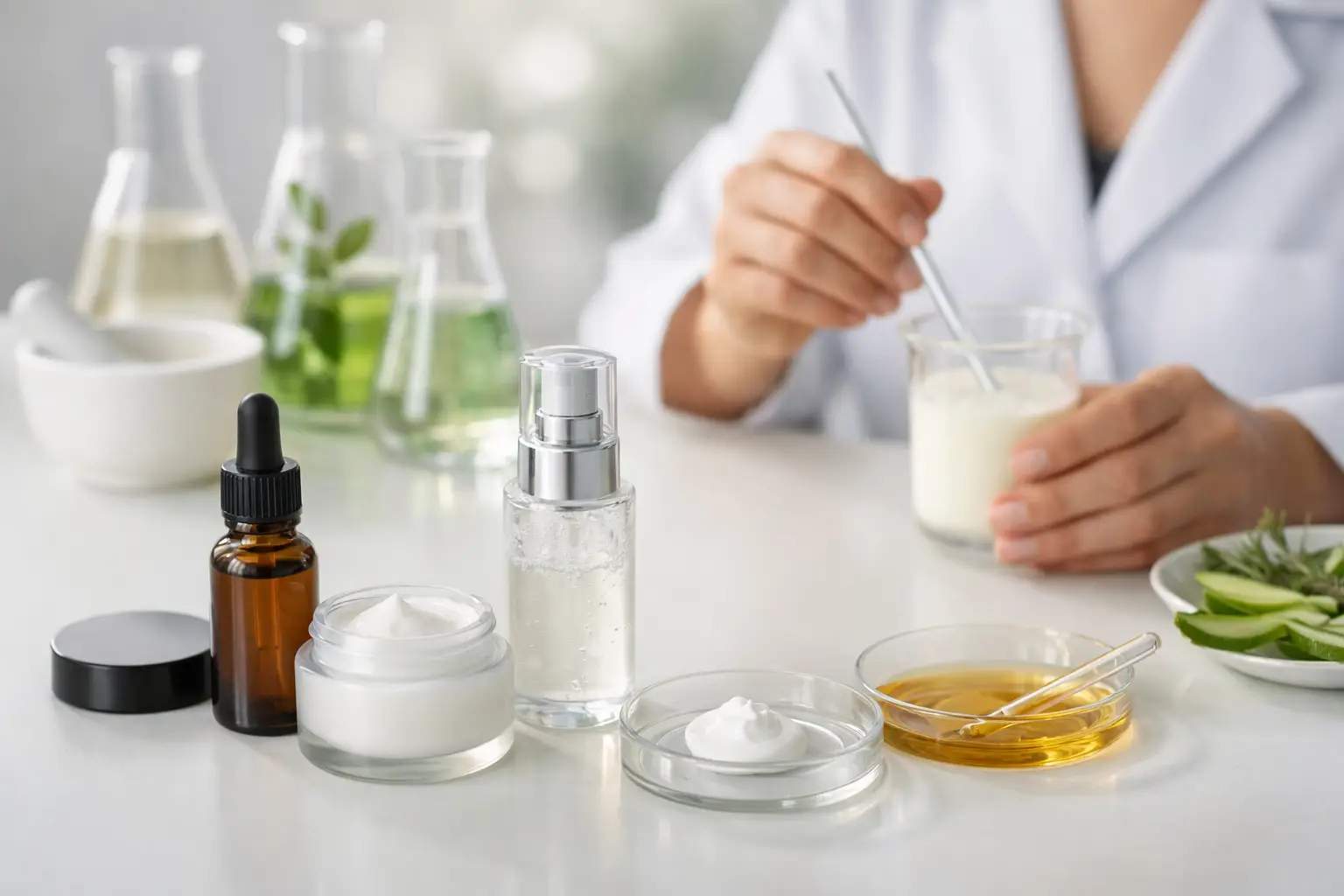
A good skincare idea can sound compelling in a pitch deck and still fail the moment it reaches a lab. Texture is off. Claims are too broad. Packaging is incompatible. Costs drift beyond target margin. This is why custom skincare formulation matters so much for founders and beauty businesses – it turns a concept into a product that can actually perform in the market, on the shelf, and in production.
For brands entering a crowded category, custom work is not just about creating something different for the sake of novelty. It is about building a product that aligns with your customer, your price point, your retail strategy, and your long-term brand identity. When the formulation process is handled strategically, it becomes one of the clearest ways to create real brand value.
What custom skincare formulation really means
Custom skincare formulation is the process of developing a skincare product from a specific brand brief rather than selecting an off-the-shelf base and applying minor changes. That brief may include skin concerns, ingredient preferences, target market, sensory direction, claims strategy, regulatory needs, packaging format, and manufacturing goals.
In practice, this means every major decision is interconnected. A founder may want a lightweight brightening serum with a premium skin feel, clean positioning, and a target retail price that supports salon resale or e-commerce margins. Those goals affect ingredient selection, active levels, stability requirements, viscosity, preservation system, packaging, and batch economics.
This is where many new brands underestimate the process. Formulation is not only chemistry. It is also product positioning, supply chain planning, compliance thinking, and commercial discipline.
Why founders choose custom over private label
Private label can be a smart route when speed is the top priority or when a business wants to test demand with lower development complexity. But custom development gives brands more control over what the product stands for and how it competes.
That difference becomes especially important in premium skincare, professional salon retail, and founder-led brands with a clear point of view. If your market positioning depends on a signature texture, a targeted treatment concept, a region-specific trend, or a formula story customers cannot easily find elsewhere, custom is usually the stronger path.
It also creates better alignment between product and brand message. If your brand promises barrier support, minimalist routines, or clinical-style results, your formulas need to support that promise in a credible way. Generic products can dilute that positioning fast.
That said, custom is not automatically the right choice for every launch. It typically requires more development time, more testing, and greater clarity upfront. The payoff is stronger differentiation, but the path is more involved.
The business case for custom skincare formulation
A custom product can strengthen more than your marketing. It can improve margins, support higher perceived value, and give your brand more room to grow across channels.
Retailers, salons, and consumers are all more selective than they were a few years ago. They want a reason to care. A well-developed custom formula can offer that reason through performance, ingredient strategy, sensorial experience, or format innovation. The result is not just a product that looks premium, but one that justifies its place in a competitive lineup.
There is also a brand equity advantage. When your hero products are built around your own concept and execution, your business becomes less interchangeable. That matters if you plan to expand into collections, enter international markets, or build a more premium valuation over time.
How the formulation process should work
A strong development process starts with a detailed brief, not with random ingredient requests. Founders often arrive with inspiration from social media, trend reports, or products they admire. That is useful, but it is not yet a development strategy.
The brief needs to answer practical questions. Who is the product for? What skin concern does it address? What price architecture does the brand need? Is the goal a first launch hero product or a line extension? Will it be sold direct to consumer, through clinics, through salons, or across multiple markets with different compliance considerations?
Once the direction is clear, formulation work can begin with the right constraints in place. Early samples are where ideas become tangible. This stage is often underestimated by first-time founders because they expect one perfect sample immediately. In reality, refinement is normal. Texture, fragrance level, absorption, finish, and color may all need adjustment.
Then comes a more technical phase. Stability, compatibility, preservation, and packaging interaction need to be checked before a product is ready for scale. A formula that feels excellent in a sample jar can behave very differently in final packaging or under production conditions. This is why experienced development partners build the process around both creative and technical validation.
What separates a promising formula from a scalable one
A formula can be attractive on paper and still be difficult to manufacture consistently. This is one of the biggest gaps between concept-driven product development and commercially ready execution.
Scalable formulation considers raw material availability, batch reproducibility, lead times, manufacturing capabilities, and cost control from the start. If a formula relies on difficult sourcing, unstable combinations, or an unrealistic cost structure, it may slow your launch or force compromises later.
This is also where international manufacturing expertise can make a measurable difference. Access to production networks across key beauty regions allows brands to match their concept to the right capabilities, whether they are pursuing advanced skincare textures, premium fragrance integration, or specific finishing standards. For a founder, that means fewer blind spots between the idea stage and the final delivered product.
Custom skincare formulation and compliance cannot be separated
Many founders think about compliance late, once the product is already developed. That approach creates expensive delays.
Claims, ingredient restrictions, testing requirements, labeling standards, and documentation all influence formulation decisions. If your product is intended for multiple markets, those requirements can become even more complex. A formula designed without regulatory foresight may need significant revision before launch.
The better approach is to build compliance awareness into development from the beginning. That does not make the process less creative. It makes it more efficient and more realistic. Good product development protects both brand vision and market access.
For emerging beauty brands, this support is often as valuable as the formulation itself. It reduces the risk of investing in packaging, content, and launch materials around a product that is not fully ready for sale.
How to know if your brand is ready for custom development
Not every founder needs a full custom route on day one. But many are more ready than they think.
If you have a defined audience, a clear product concept, and a reason your formula should feel or perform differently from what is already available, you are likely in a good position to explore it. The same applies if your business model depends on premium branding, professional resale, or a more distinctive hero product.
Where brands struggle is not usually ambition. It is lack of structure. When the brief is vague, budgets are unclear, or expectations around timelines are unrealistic, the process becomes harder than it needs to be. A strong development partner helps turn that ambition into a framework the lab and production team can execute against.
This is why many founders choose a turnkey model. Instead of managing separate suppliers for formulation, packaging, manufacturing, and logistics, they work through a single coordinated process. That saves time, but more importantly, it reduces disconnect between decisions that need to work together.
Choosing the right partner for custom skincare formulation
The best partner is not simply the one with the longest ingredient list or the fastest yes to every request. It is the one that can balance creativity with technical honesty.
You want a team that can tell you when an idea is strong, when it needs refinement, and when a trade-off is necessary. Sometimes that trade-off is about cost. Sometimes it is about stability, claims, minimum order quantities, or packaging compatibility. Clear guidance at this stage protects the brand later.
A capable partner should also understand the commercial side of beauty, not just the lab side. Founders need support that connects formula decisions to market trends, customer expectations, retail presentation, and operational readiness. This is where a company like Arwalabs can be especially valuable – not only in developing the product itself, but in shaping the full path from concept to launch with global manufacturing perspective.
The strongest skincare brands rarely begin with a formula alone. They begin with a point of view, then build products that prove it. Custom development gives you the chance to create that proof with intention, discipline, and a much better chance of standing out for the right reasons.
If you are building a beauty brand meant to last, treat formulation as a business decision as much as a creative one. The right product does more than fill a category gap. It gives your brand something credible to own.